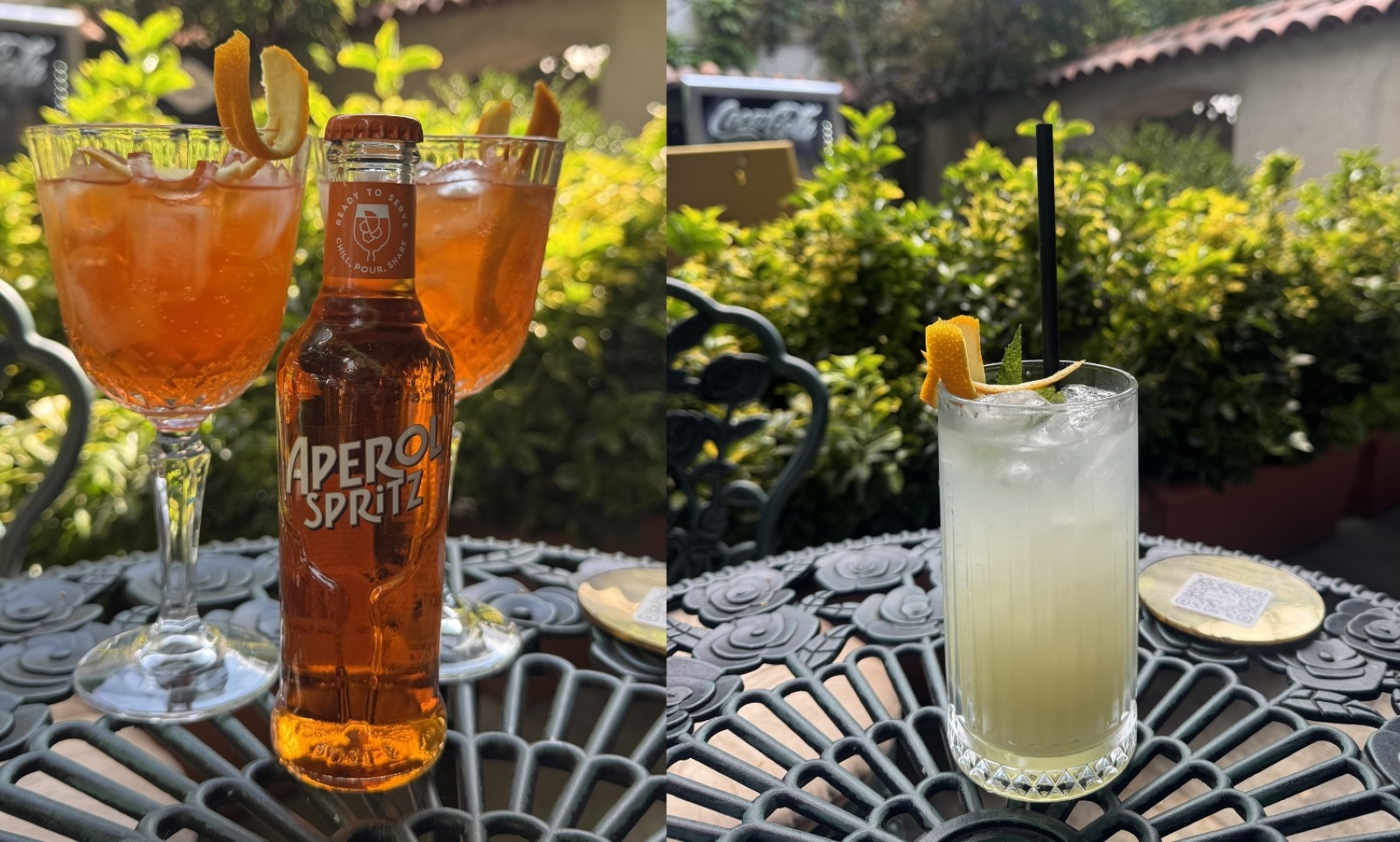
Există o oră a zilei pe care italienii au transformat-o în artă: ora aperitivului. Nu este nici prânz, nici cină, ci pauza dintre ele — momentul în care ziua de lucru se închide și seara se deschide, însoțit de un pahar colorat și de ceva de ronțăit. Cocktailurile signature ale Art Deco Café se nasc exact din acest ritual. Sunt puține și gândite cu grijă, dar fiecare readuce în curtea Casei Tătărescu spiritul anilor '20-'30 — deceniul în care cocktailul a devenit, pentru prima dată, un limbaj universal. Iată poveștile și rețetele lor savuroase.
Epoca de aur a aperitivului
Anii dintre cele două războaie au fost vârsta de aur a cocktailului. În America, prohibiția împingea mixologia spre barurile elegante ale Europei; în Italia, ritualul aperitivului prindea contur în cafenelele din Padova și în barurile Veneției. Era exact epoca pe care o evocă numele Art Deco: pahare colorate, baruri rafinate, o anumită ușurătate a serii.
Băutura-simbol a acestui ritual are o etimologie surprinzătoare. Cuvântul spritz vine din verbul german spritzen, „a stropi": în secolul al XIX-lea, soldații habsburgici aflați în Veneto cereau să li se „stropească" vinurile locale, prea tari pentru gustul lor, cu apă carbogazoasă. Din acel obicei s-a născut, peste decenii, cocktailul portocaliu de azi. Piesa care i-a dat culoarea a apărut în 1919, când frații Luigi și Silvio Barbieri au lansat la Târgul Internațional de la Padova un lichior nou: Aperol. Rețeta de Aperol Spritz pe care o știm astăzi avea să se cristalizeze abia în anii '50, dar drumul ei începuse chiar în deceniile Art Deco.
Aperol Spritz — portocaliul serii
Vedeta listei este, fără îndoială, Aperol Spritz — paharul portocaliu care a cucerit terasele lumii. Rețeta lui este memorabilă tocmai pentru că este simplă, construită pe regula clasică „3-2-1":
- 3 părți Prosecco
- 2 părți Aperol
- 1 strop de apă carbogazoasă
- gheață multă și o felie de portocală
Secretul nu stă în ingrediente, ci în echilibru și în temperatură: paharul trebuie să fie foarte rece, gheața generoasă, iar felia de portocală adăugată la final, pentru aromă. Rezultatul este o băutură amăruie-citrică, cu un grad de alcool scăzut — exact ce cere o după-amiază lungă. La o masă din curtea Casei Tătărescu, sub umbra teilor, Aperol Spritz devine traducerea perfectă a aperitivului italian în limbaj bucureștean.
Mionetto Il Spritz — venețianul gata făcut
Pentru cine vrea același spirit, dar fără așteptare, există Mionetto Il Spritz — un spritz gata preparat, semnat de o casă din chiar inima Prosecco-ului, dealurile Valdobbiadene. Este o combinație de Prosecco și amar, îmbuteliată în proporția potrivită și servită rece, cu felia obligatorie de portocală.
Farmecul lui stă în autenticitate: descinde direct din Spritz Veneto, strămoșul tuturor spritz-urilor, și păstrează caracterul ușor amărui al rețetei originale. Pentru o seară în care vrei clasicul fără variațiuni, este alegerea sigură — un toast venețian la îndemână.
Espresso Tonic — cocktailul casei
Dintre toate semnăturile, cea mai surprinzătoare leagă cele două suflete ale locului: cafeaua și aperitivul. Espresso Tonic este un long drink răcoritor, fără alcool, care a devenit una dintre cele mai căutate băuturi de specialitate ale ultimilor ani, venit pe filiera scandinavă. Rețeta cere atenție la ordine:
- un pahar înalt umplut cu gheață
- apă tonică premium turnată peste gheață
- deasupra, un espresso dublu Caffè Vergnano 1882, lăsat să cadă lent
- o felie de portocală, pentru parfum
Turnat în această ordine, espresso-ul se așază peste tonic în vinișoare brune, ca un mic spectacol, înainte ca băutura să fie amestecată. Gustul este neașteptat: amărui-citric, efervescent, răcoritor, cu profilul aromatic al cafelei piemonteze păstrat intact. Pentru cei care iubesc cafeaua, dar vor ceva de vară, este descoperirea sigură a sezonului — și dovada că espresso-ul bun nu trebuie băut doar fierbinte.
Limonada Art Deco — semnătura fără alcool
Nu orice băutură de semnătură are nevoie de alcool. Limonada Art Deco este dovada — o limonadă gândită ca alternativă la ritualul cafelei, intens aromată, servită în porție mică. Rețeta este la fel de precisă ca un cocktail:
- 3 lămâi proaspăt stoarse, pe loc
- 8 frunze de mentă, ușor zdrobite ca să-și elibereze uleiurile
- apă minerală carbogazoasă
- cuburi mari de gheață
- la alegere, îndulcire cu zahăr sau cu miere poliflora „Moș Costache"
Mentă zdrobită, nu mărunțită; gheață mare, ca să răcească fără să dilueze prea repede; mierea de flori, pentru o dulceață rotundă, naturală. Rezultatul este o limonadă care nu seamănă cu cele de la dozator — proaspătă, vie, numai bună pentru o după-amiază caniculară sau pentru oaspeții care preferă să rămână limpezi până seara.
Ora aurie, în curtea Casei Tătărescu
Toate aceste cocktailuri signature ale Art Deco Café au un numitor comun: sunt gândite pentru ora aurie, momentul în care lumina coboară peste curte și ziua se predă serii. Nu este o listă lungă de bar, ci o mână de băuturi alese — fiecare cu povestea și rețeta ei —, menite să transforme o pauză într-un mic ritual.
Le găsești pe toate la Art Deco Café, în curtea Casei Tătărescu, monument istoric din 1935 readus la viață ca EkoGroup Vila, pe Strada Polonă 19, în Sectorul 1 al Bucureștiului. Lista completă, cu toate semnăturile casei, se vede în meniul Art Deco Café; rezervări la 0771 303 303 sau pe office@ekogroup.ro, iar atmosfera curții la apus pe Instagram, TikTok și YouTube. Vino la ora aperitivului — restul se rezolvă de la sine, cu un pahar rece în mână.
There is an hour of the day that the Italians have turned into an art form: the aperitivo hour. It is neither lunch nor dinner, but the pause between them — the moment when the working day closes and the evening opens, accompanied by a colourful glass and something to nibble. The signature cocktails of Art Deco Café are born from exactly this ritual. There are few of them and each has been crafted with care, yet every one brings back to the courtyard of Casa Tătărescu the spirit of the 1920s and 30s — the decade in which the cocktail first became, for the very first time, a universal language. Here are their stories and recipes.
The Golden Age of the Aperitif
The years between the two world wars were the golden age of the cocktail. In America, Prohibition was pushing mixology towards the elegant bars of Europe; in Italy, the aperitivo ritual was taking shape in the cafés of Padua and the bars of Venice. It was exactly the era that the name Art Deco evokes: colourful glasses, refined bars, a certain lightness of evening.
The signature drink of this ritual has a surprising etymology. The word spritz comes from the German verb spritzen, "to splash": in the nineteenth century, Habsburg soldiers stationed in the Veneto asked to have the local wines, too strong for their taste, "splashed" with sparkling water. From that habit, across the decades, grew the orange cocktail we know today. The piece that gave it its colour appeared in 1919, when brothers Luigi and Silvio Barbieri launched a new liqueur at the International Fair in Padua: Aperol. The Aperol Spritz recipe as we know it today would not crystallise until the 1950s, but its journey had begun in the very Art Deco decades.
Aperol Spritz — The Orange of the Evening
The star of the list is, without doubt, Aperol Spritz — the orange glass that has conquered terraces the world over. Its recipe is memorable precisely because it is simple, built on the classic "3-2-1" rule:
- 3 parts Prosecco
- 2 parts Aperol
- 1 splash of sparkling water
- plenty of ice and a slice of orange
The secret lies not in the ingredients but in balance and temperature: the glass must be very cold, the ice generous, and the orange slice added last, for fragrance. The result is a bittersweet, citrus drink with a low alcohol content — exactly what a long afternoon requires. At a table in the courtyard of Casa Tătărescu, beneath the linden trees, Aperol Spritz becomes the perfect translation of the Italian aperitivo into Bucharest language.
Mionetto Il Spritz — The Ready-Made Venetian
For those who want the same spirit without the wait, there is Mionetto Il Spritz — a ready-made spritz signed by a house from the very heart of Prosecco country, the Valdobbiadene hills. It is a combination of Prosecco and bitters, bottled in the right proportion and served cold, with the obligatory orange slice.
Its charm lies in its authenticity: it descends directly from the Spritz Veneto, ancestor of all spritz drinks, and preserves the lightly bitter character of the original recipe. For an evening when you want the classic without variations, it is the safe choice — a Venetian toast within reach.
Espresso Tonic — The House Cocktail
Of all the signatures, the most surprising links the two souls of the place: coffee and the aperitif. Espresso Tonic is a long, refreshing non-alcoholic drink that has become one of the most sought-after speciality beverages of recent years, arriving via a Scandinavian route. The recipe requires attention to order:
- a tall glass filled with ice
- premium tonic water poured over the ice
- on top, a double Caffè Vergnano 1882 espresso, allowed to fall slowly
- a slice of orange, for fragrance
Poured in this order, the espresso settles over the tonic in brown wisps — a small spectacle — before the drink is stirred. The flavour is unexpected: bittersweet, citrus, effervescent, refreshing, with the aromatic profile of the Piedmontese coffee kept intact. For coffee lovers who want something summery, it is the season's sure discovery — and proof that good espresso need not be drunk hot.
Art Deco Lemonade — The Non-Alcoholic Signature
Not every signature drink needs alcohol. Art Deco Lemonade is the proof — a lemonade conceived as an alternative to the coffee ritual, intensely aromatic, served in a small portion. The recipe is as precise as a cocktail:
- 3 lemons, freshly squeezed on the spot
- 8 mint leaves, lightly bruised to release their oils
- sparkling mineral water
- large ice cubes
- sweetened to taste with sugar or "Moș Costache" polyfloral honey
Bruised mint, not shredded; large ice, so it cools without diluting too quickly; wildflower honey, for a rounded, natural sweetness. The result is a lemonade that bears no resemblance to a dispensed version — fresh, alive, perfect for a sweltering afternoon or for guests who prefer to stay clear-headed through the evening.
The Golden Hour, in the Courtyard of Casa Tătărescu
All these Art Deco Café signature cocktails share a common denominator: they are made for the golden hour, the moment when the light descends across the courtyard and the day surrenders to the evening. This is not a long bar list but a handful of chosen drinks — each with its story and its recipe — designed to turn a pause into a small ritual.
Find them all at Art Deco Café, in the courtyard of Casa Tătărescu, a listed historic monument from 1935 brought back to life as EkoGroup Vila, at 19 Polonă Street, Sector 1, Bucharest. The full list of house signatures is in the Art Deco Café menu; reservations at 0771 303 303 or office@ekogroup.ro, and the courtyard atmosphere at sunset on Instagram, TikTok and YouTube. Come at aperitivo hour — the rest takes care of itself, with a cold glass in hand.