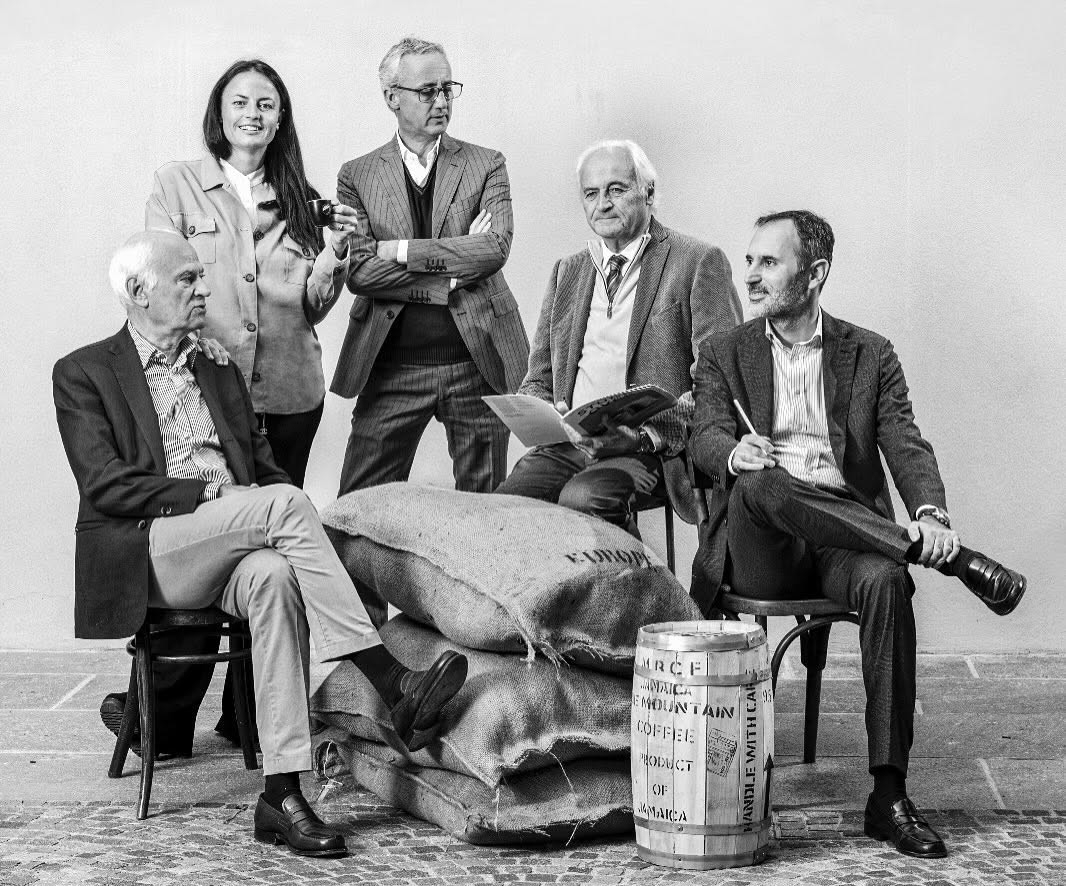
Sunt băuturi care se beau și se uită — și sunt băuturi care duc cu ele aproape un veac și jumătate. Un espresso Caffè Vergnano 1882 face parte din a doua categorie. În ceașca aceea mică încape o poveste de peste 140 de ani: cinci generații ale unei familii din Piemont care au făcut, neîntrerupt, același lucru — au prăjit cafea. De la o băcănie de provincie până la rafturile din peste optzeci de țări, saga Vergnano este una dintre cele mai longevive povești de familie din întreaga cafea italiană.
1882: o băcănie și o obsesie
Totul începe la Chieri, un orășel din colinele de lângă Torino, unde Domenico Vergnano deschide, în 1882, o mică băcănie. Printre mărfurile lui se află și cafeaua — pe care, în loc s-o vândă pur și simplu, alege s-o prăjească singur. Pasiunea aceasta devine repede mai mult decât un meșteșug: devine identitatea afacerii. Vergnano își deschide depozite la Torino, la Alba și la Chieri, iar numele său începe să se lege, în Piemont, de o cafea prăjită cu grijă, nu industrial.
Detaliul care contează nu este vechimea în sine, ci continuitatea. Casa se prezintă astăzi drept cea mai veche torefacție din Italia, iar pretenția nu este goală: din 1882 până azi, prăjirea a rămas în mâinile aceleiași familii. Puține branduri alimentare din lume pot spune că au făcut, fără întrerupere, același gest, de-a lungul a cinci generații care s-au succedat una după cealaltă.
A doua generație și drumul până la plantație
Dacă fondatorul a pus pasiunea, fiul său a adăugat îndrăzneala. În 1930, Enrico Vergnano, fiul lui Domenico, ia o decizie neobișnuită pentru un torefactor european al epocii: cumpără o fermă de cafea în Kenya. Într-o vreme în care aproape toți prăjitorii europeni cumpărau boabe prin intermediari, Vergnano alege să meargă direct la sursă, ca să controleze el însuși calitatea de la plantație până în ceașcă.
Gestul are valoare de strategie, nu doar de aventură. Stăpânirea materiei prime — soiul, terenul, recolta — îi dă familiei o independență rară și o școală practică despre cafea pe care puține case o aveau. Este momentul în care Vergnano încetează să fie un negustor local și devine un cunoscător al cafelei de la rădăcină.
1970: noua eră
A treia generație preia frâiele într-un moment de cotitură. În 1970, Carlo și Franco Vergnano — care își petrecuseră copilăria chiar în băcănia bunicului — preiau conducerea companiei și o pregătesc pentru o cu totul altă scară. Sub mâna lor, atelierul de familie începe drumul spre o casă de cafea cunoscută dincolo de granițele Piemontului, fără să-și piardă însă rețeta de bază: prăjirea lentă, atentă, moștenită de la Domenico.
Echilibrul acesta — creștere fără trădarea metodei — devine marca distinctivă a deceniilor următoare. Compania se modernizează, dar refuză să industrializeze gustul. Cafeaua rămâne, în esență, aceeași pe care o vindea băcănia din Chieri.
A patra și a cincea generație, azi la cârmă
Astăzi, conducerea casei este împărțită între a patra și a cincea generație. Din a patra fac parte Carolina, Enrico și Pietro Vergnano; dintre ei, Carolina a scris o pagină aparte — a lăsat o carieră în Franța și s-a întors în Italia pentru afacerea familiei, devenind, după propriile cuvinte, „prima femeie CEO după trei generații". Alături de ei, a cincea generație a familiei a început deja să intre în afacere, semn că povestea începută la Chieri își caută de pe acum următorul capitol. Peste toate, brandul își propune să păstreze valorile de familie și să crească în piețele noi, fără să renunțe la sufletul artizanal.
Tot aici se așază și grija pentru transmiterea meșteșugului. Prin Accademia Vergnano, casa își formează proprii baristi și răspândește, dincolo de propriile cafenele, cultura espresso-ului făcut corect. Cafeaua nu este doar vândută; este și predată mai departe, ca o limbă de familie.
De la Chieri la peste optzeci de țări
Drumul de la băcănia piemonteză la prezența globală spune mult despre cum a crescut casa fără să se piardă. Cu sloganul „L'autentico Espresso Italiano", Vergnano și-a dus cafenelele în orașe din toată lumea, a deschis locații în gări și aeroporturi — inclusiv la Roma Termini — și a ajuns, prin parteneriate, până la Singapore, Tokyo, New York sau Toronto. Astăzi, cu sediul la Santena, lângă Torino, compania exportă în peste optzeci de țări.
Un alt reper al maturității a venit în 2021, când Coca-Cola HBC a preluat o participație de 30% pentru a gestiona distribuția internațională — un pas care a dus cafeaua de familie pe rafturi de pe mai multe continente, fără ca familia să piardă controlul asupra prăjirii. La aniversarea celor 140 de ani, casa și-a povestit chiar istoria într-o carte, „Il fuoco sotto al caffè" („Focul de sub cafea") — un titlu care spune, în patru cuvinte, tot ce trebuie știut despre o familie care păzește, de generații, același jar.
Aceeași ceașcă, la București
Toată această poveste de aproape un secol șți jumătate se termină, pentru băutorul din București, într-un gest foarte simplu: o ceașcă de cafea pusă pe masă. La Art Deco Café, amenajat în curtea Casei Tătărescu — monument istoric din 1935, astăzi EkoGroup Vila —, cafeaua de pe espressor este chiar Caffè Vergnano 1882. Între zidurile vechi de cărămidă și la umbra teilor, espresso-ul piemontez își găsește un cadru pe măsura vârstei lui.
Este, până la urmă, o întâlnire potrivită: o cafea cu istorie de familie, servită într-o casă cu istorie de familie. Lista completă — de la espresso scurt la cappuccino, flat white sau variantele cu lapte vegetal — se vede în meniul Art Deco Café, pe Strada Polonă 19, în Sectorul 1 al Bucureștiului; programări la 0771 303 303 sau pe office@ekogroup.ro, iar atmosfera curții pe Instagram, TikTok și YouTube. Un espresso Caffè Vergnano 1882 nu este doar o cafea bună — este o înghițitură dintr-o poveste care durează de peste un secol.
There are drinks you consume and forget — and there are drinks that carry with them nearly a century and a half. A Caffè Vergnano 1882 espresso belongs to the second category. That small cup holds a story of over 140 years: five generations of a Piedmontese family who have done, without interruption, the same thing — roasted coffee. From a provincial grocery to shelves in more than eighty countries, the Vergnano saga is one of the most enduring family stories in all of Italian coffee.
1882: A Grocery and an Obsession
Everything begins in Chieri, a small town in the hills near Turin, where Domenico Vergnano opens a small grocery in 1882. Among his wares is coffee — which, instead of simply selling, he chooses to roast himself. This passion quickly becomes more than a craft: it becomes the identity of the business. Vergnano opens depots in Turin, Alba and Chieri, and his name begins to be associated, across Piedmont, with coffee that is roasted with care, not industrially.
What matters is not the age in itself, but the continuity. The house presents itself today as the oldest roastery in Italy, and the claim is not empty: from 1882 to today, the roasting has remained in the hands of the same family. Few food brands in the world can say that they have performed, without interruption, the same gesture across five generations, each succeeding the last.
The Second Generation and the Road to the Plantation
If the founder provided the passion, his son added the boldness. In 1930, Enrico Vergnano, Domenico's son, makes an unusual decision for a European roaster of the era: he purchases a coffee farm in Kenya. At a time when almost all European roasters bought beans through intermediaries, Vergnano chose to go directly to the source, to control quality himself from plantation to cup.
The gesture has the value of a strategy, not merely an adventure. Command of the raw material — variety, terroir, harvest — gives the family a rare independence and a hands-on schooling in coffee that few houses possessed. This is the moment at which Vergnano ceases to be a local merchant and becomes a connoisseur of coffee from its roots.
1970: A New Era
The third generation takes the reins at a turning point. In 1970, Carlo and Franco Vergnano — who had spent their childhood in their grandfather's very grocery — take over the company and prepare it for an entirely different scale. Under their stewardship, the family workshop begins its journey towards a coffee house known beyond the borders of Piedmont, without, however, losing its founding recipe: the slow, careful roasting inherited from Domenico.
This balance — growth without betraying the method — becomes the distinctive mark of the following decades. The company modernises but refuses to industrialise its flavour. The coffee remains, in essence, the same one sold by the Chieri grocery.
The Fourth and Fifth Generations at the Helm Today
Today, leadership is shared between the fourth and fifth generations. The fourth includes Carolina, Enrico and Pietro Vergnano; of these, Carolina has written a chapter of her own — she left a career in France and returned to Italy for the family business, becoming, in her own words, "the first female CEO after three generations". Alongside them, the fifth generation of the family has already begun to enter the business, a sign that the story begun in Chieri is already looking for its next chapter. Across everything, the brand is committed to preserving family values while growing in new markets, without relinquishing its artisan soul.
This is also where the transmission of craft sits. Through the Accademia Vergnano, the house trains its own baristas and spreads, beyond its own cafés, the culture of properly made espresso. Coffee is not merely sold; it is taught, like a family language.
From Chieri to Over Eighty Countries
The road from the Piedmontese grocery to a global presence says much about how the house grew without losing itself. With the slogan "L'autentico Espresso Italiano", Vergnano has taken its cafés to cities across the world, opened locations in railway stations and airports — including Roma Termini — and reached, through partnerships, as far as Singapore, Tokyo, New York and Toronto. Today, headquartered in Santena near Turin, the company exports to over eighty countries.
Another milestone of maturity came in 2021, when Coca-Cola HBC acquired a 30% stake to manage international distribution — a step that placed the family coffee on shelves across multiple continents, without the family losing control of the roasting. At the 140th anniversary, the house told its own history in a book, "Il fuoco sotto al caffè" ("The Fire Beneath the Coffee") — a title that says, in four words, everything that needs to be known about a family that has tended, across generations, the same ember.
The Same Cup, in Bucharest
All of this nearly century-and-a-half story ends, for the drinker in Bucharest, in a very simple gesture: a cup of coffee placed on a table. At Art Deco Café, set in the courtyard of Casa Tătărescu — a listed historic monument from 1935, today EkoGroup Vila — the coffee on the machine is Caffè Vergnano 1882. Between old brick walls and in the shade of linden trees, the Piedmontese espresso finds a setting worthy of its age.
It is, in the end, a fitting meeting: a coffee with a family history, served in a house with a family history. The full range — from short and long espresso to cappuccino, flat white or plant-based milk options — is in the Art Deco Café menu, at 19 Polonă Street, Sector 1, Bucharest; bookings at 0771 303 303 or office@ekogroup.ro, and the courtyard atmosphere on Instagram, TikTok and YouTube. A Caffè Vergnano 1882 espresso is not merely a good coffee — it is a sip from a story that has been going on for over a century.